
Types of Leaflet
Half fold, roll fold, Z-fold or something more bespoke? The way a leaflet folds affects how much information it can hold, the order in which that information is read and how practical it is to display, carry or post. Explore leaflet printingLeaflet Folds Explained
Every folded leaflet starts as a flat sheet printed on both sides. Where the folds fall, and which way they turn, decides how many panels or pages you get, the order they’re read in and the size the leaflet closes to.
Printers count printed pages, written as pp. Fold a sheet once and you create four pages (4pp).
Each illustration below shows both sides of the flat sheet as you’d lay it out in your artwork, with typical panel sizes, and how the finished leaflet opens.

Half-fold
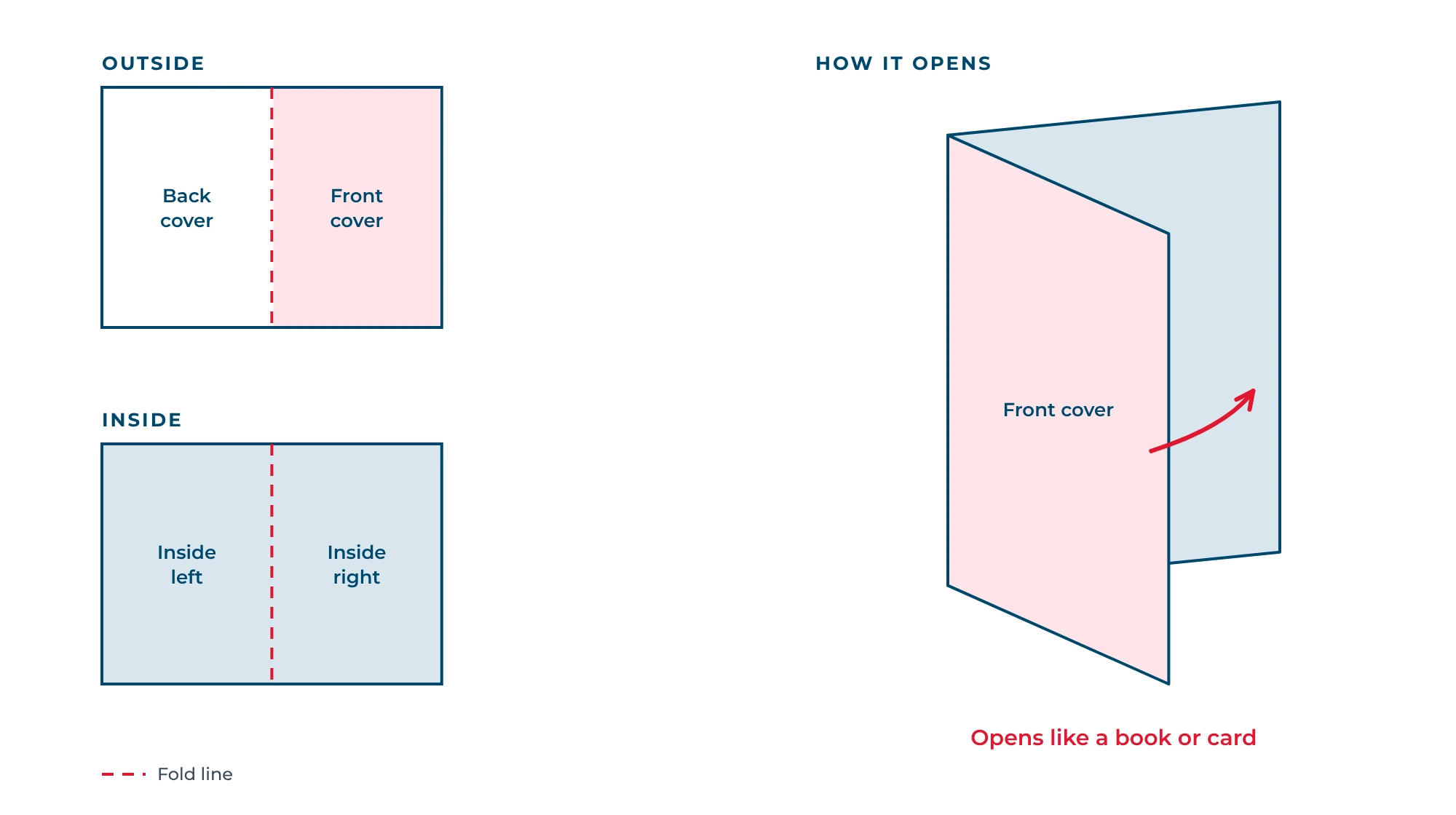
A single fold down the middle gives you a front cover, a two-page inside spread and a back cover. Everyone knows how to open it, and the inside spread gives you one clear space for the detail.
Page count: 4pp
Fold Count: 1 fold
Size: A4 folded to A5, A5 folded to A6, A3 folded to A4
Best for: menus, price lists, invitations, orders of service and inserts.
Design tip: On the outside, the front cover sits on the right and the back cover on the left. Keep faces and key words clear of the centre fold on the inside spread.
Roll-fold
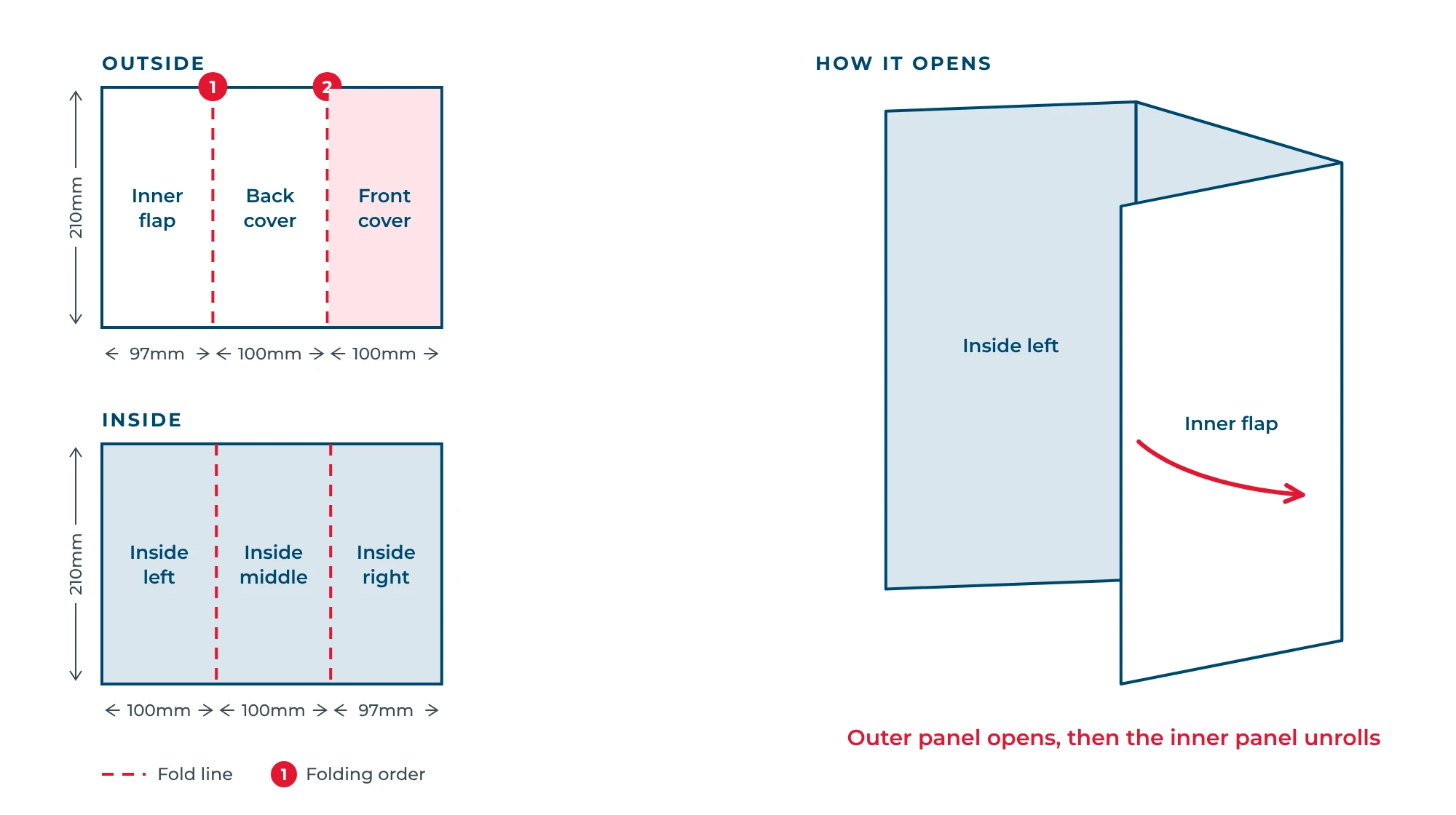
Two or more parallel folds roll each panel inside the next. The outer panel opens first, then the inner panel unrolls, so you control the order people read in. The 6pp roll fold is the classic DL “tri-fold”.
Page count: 6pp or 8pp
Fold Count: 2 or more folds
Size: A4 folded to DL
Best for: product and service guides, visitor information, step-by-step content, and leaflets for racks and mailings.
Design tip: The inner flap is 2–3mm narrower so it can tuck in, so don’t split the sheet into equal thirds. It’s also the second panel people see after the cover, so give it something worth reading.
Z-fold
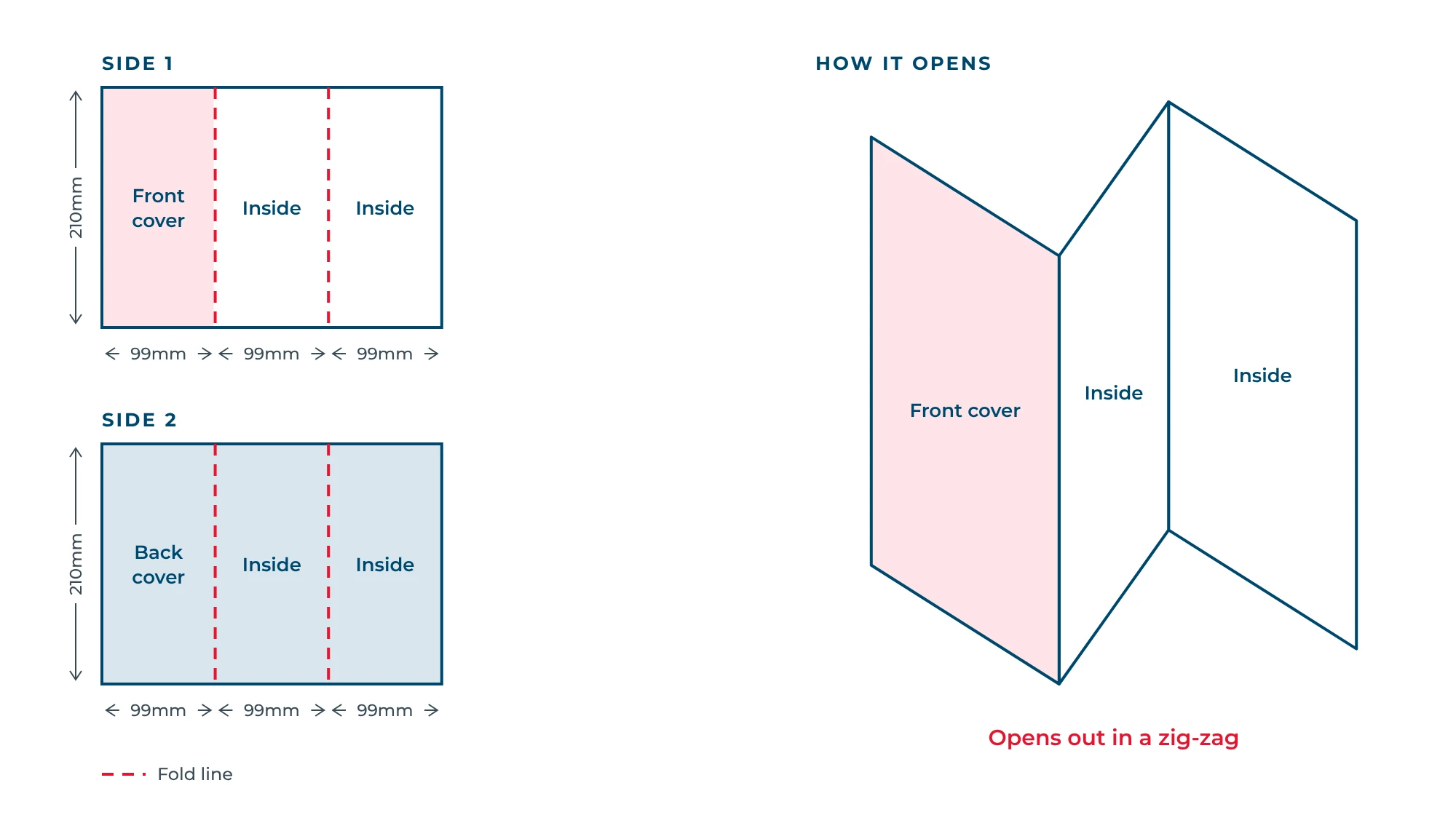
Two parallel folds turn in opposite directions, so the leaflet opens out in a zig-zag. Nothing tucks inside, so every panel is the same width and the whole sheet opens in one movement.
Page count: 6pp
Fold Count: 2 folds
Size: A4 folded to DL
Best for: timetables, maps, instructions, event programmes and DL direct mail.
Design tip: The front and back covers end up on opposite sides of the sheet. Readers can open any panel first, so make each one work on its own as well as across the open sheet.
Concertina fold
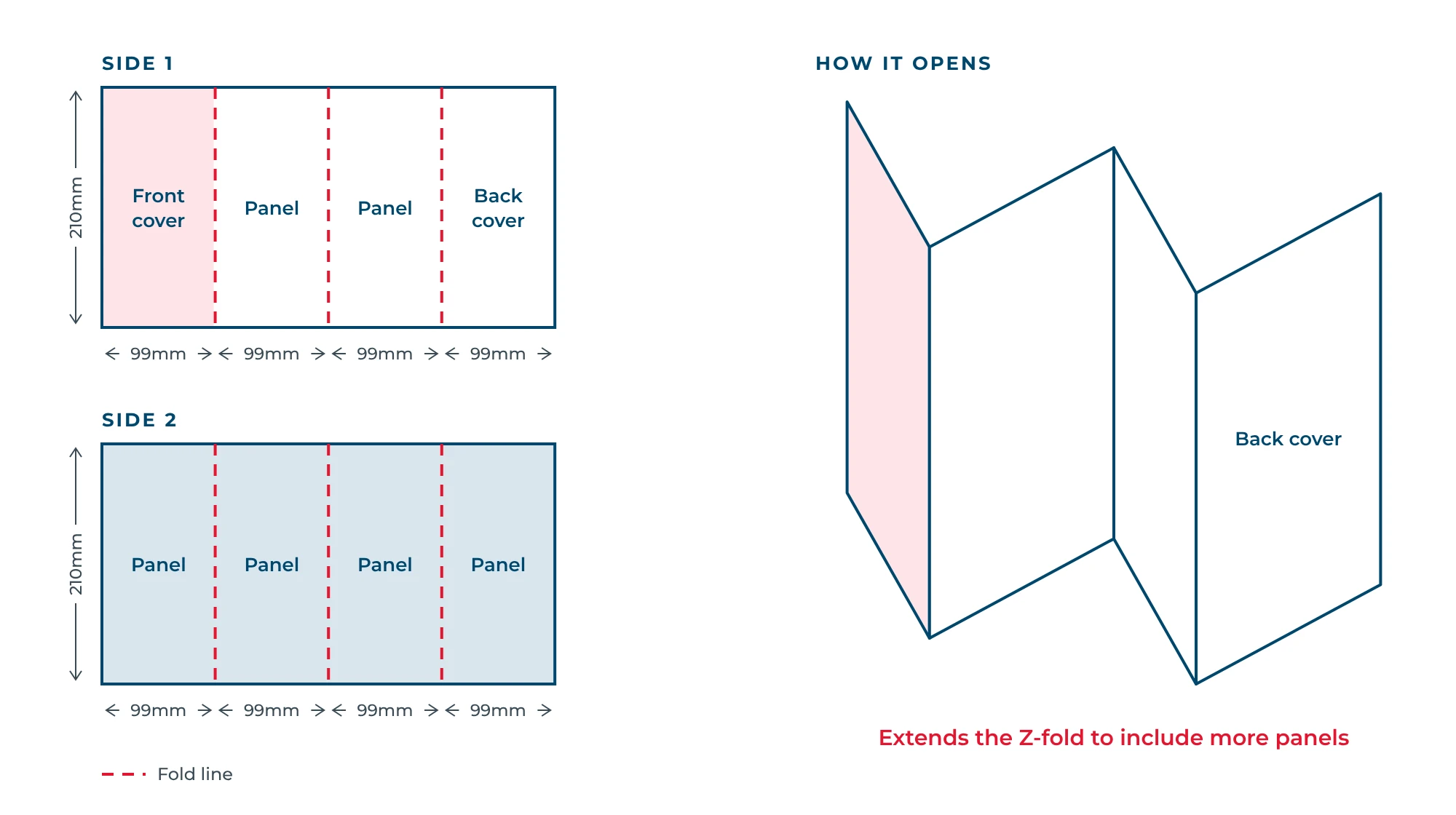
A concertina, or accordion fold, extends the Z-fold to include more panels, with each fold turning the opposite way to the last. Every panel gets equal space, and opened fully it becomes one long canvas.
Page count: 8pp and more
Fold Count: 3 or more folds
Size: Long sheets folding to DL, A6 or square
Best for: timelines, trails, event schedules and product ranges.
Design tip: A panoramic image or timeline across the full length is the big opportunity, but check it still reads one panel at a time. With an even number of panels, both covers sit on the same side of the sheet.
Gate fold
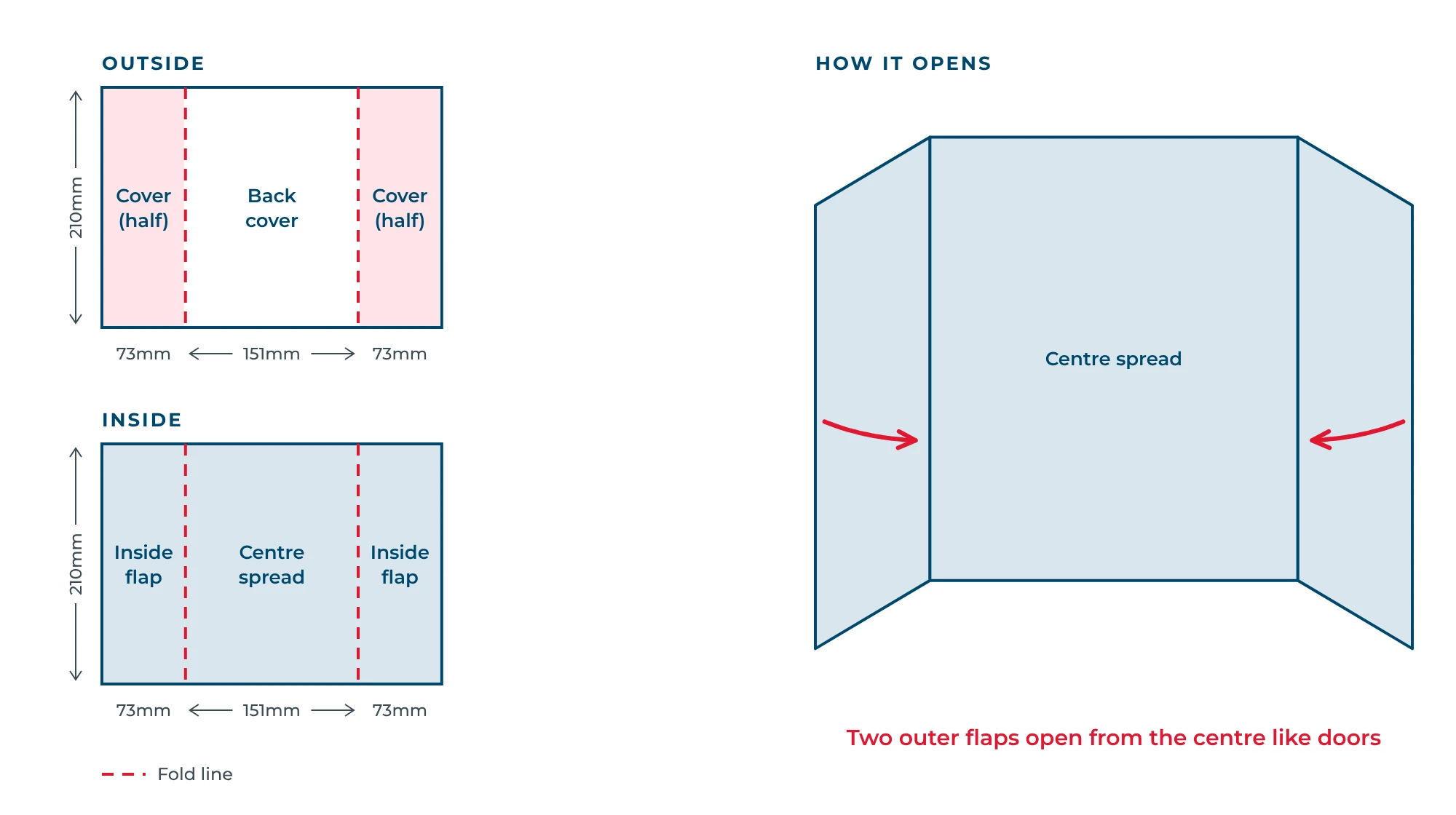
Two outer flaps fold in to meet in the middle, then open from the centre like doors. It’s built for a reveal: a hero image, product launch or offer on the wide centre spread.
Page count: 6pp (8pp if folded again down the middle)
Fold Count: 2 or 3 folds
Size: A4 folding to A5, or A3 folding to A4
Best for: launches, invitations, premium marketing and corporate brochures.
Design tip: The flaps are slightly narrower than half the centre so they close without catching. The front cover is split down the middle, so design it as two halves that also work together.
Cross fold
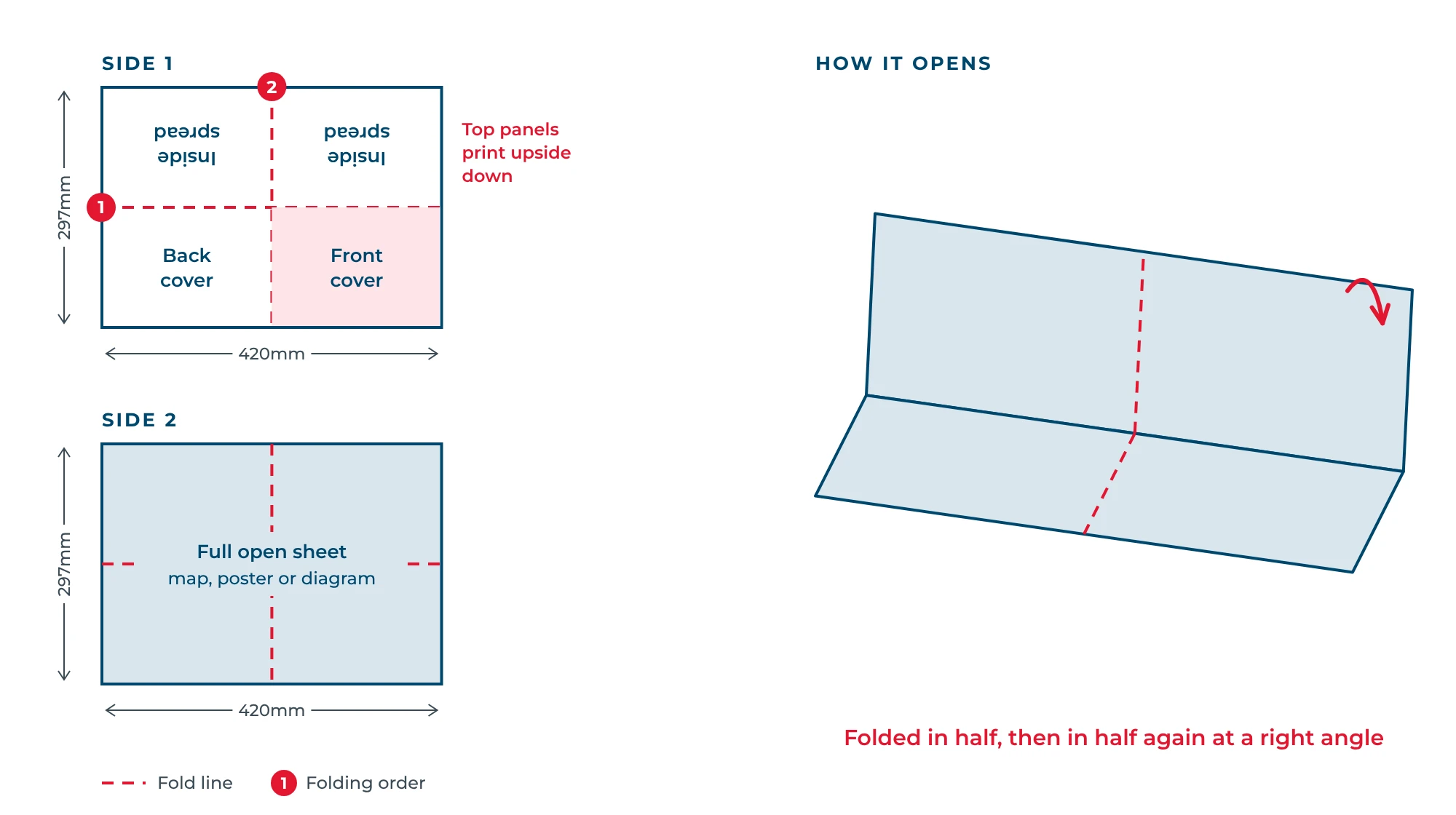
Folded in half, then in half again at a right angle. It shrinks a large sheet into a pocket-sized leaflet that opens back out to a full map or poster, which is why it’s often called a map fold.
Page count: 8pp
Fold Count: 2 folds at right angles
Size: A3 folding to A5, A2 folding to A4 or A4 folding to A6
Best for: maps, visitor guides, posters that need posting and large diagrams.
Design tip: The top panels on the cover side print upside down on the flat sheet. Fold a paper mock-up and number the panels before you start.
Double Parallel-fold
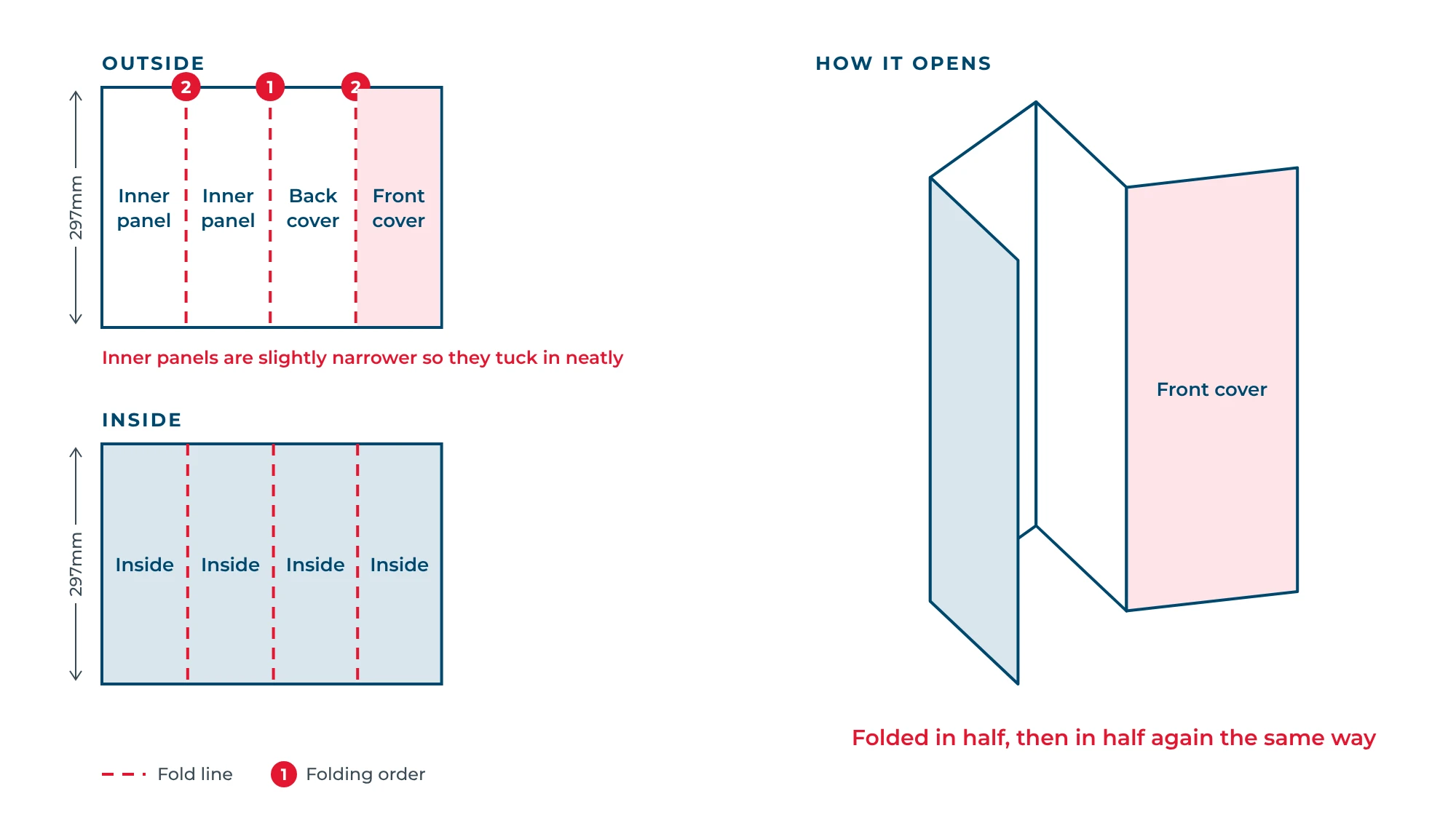
Folded in half, then in half again in the same direction, so the panels nest inside each other. It gives you twice the pages of a half fold in a tall, slim format.
8pp · folded twice · A3 to around 105 × 297mm
Page count: 8pp
Fold Count: folded twice
Size: A4 folding to DL
Best for: detailed price lists, specifications, instructions and compact guides.
Design tip: The two panels that tuck inside are slightly narrower, and both covers sit next to each other on the same side. Heavier stocks can make it bulky, so keep the paper weight sensible.
Bespoke folds
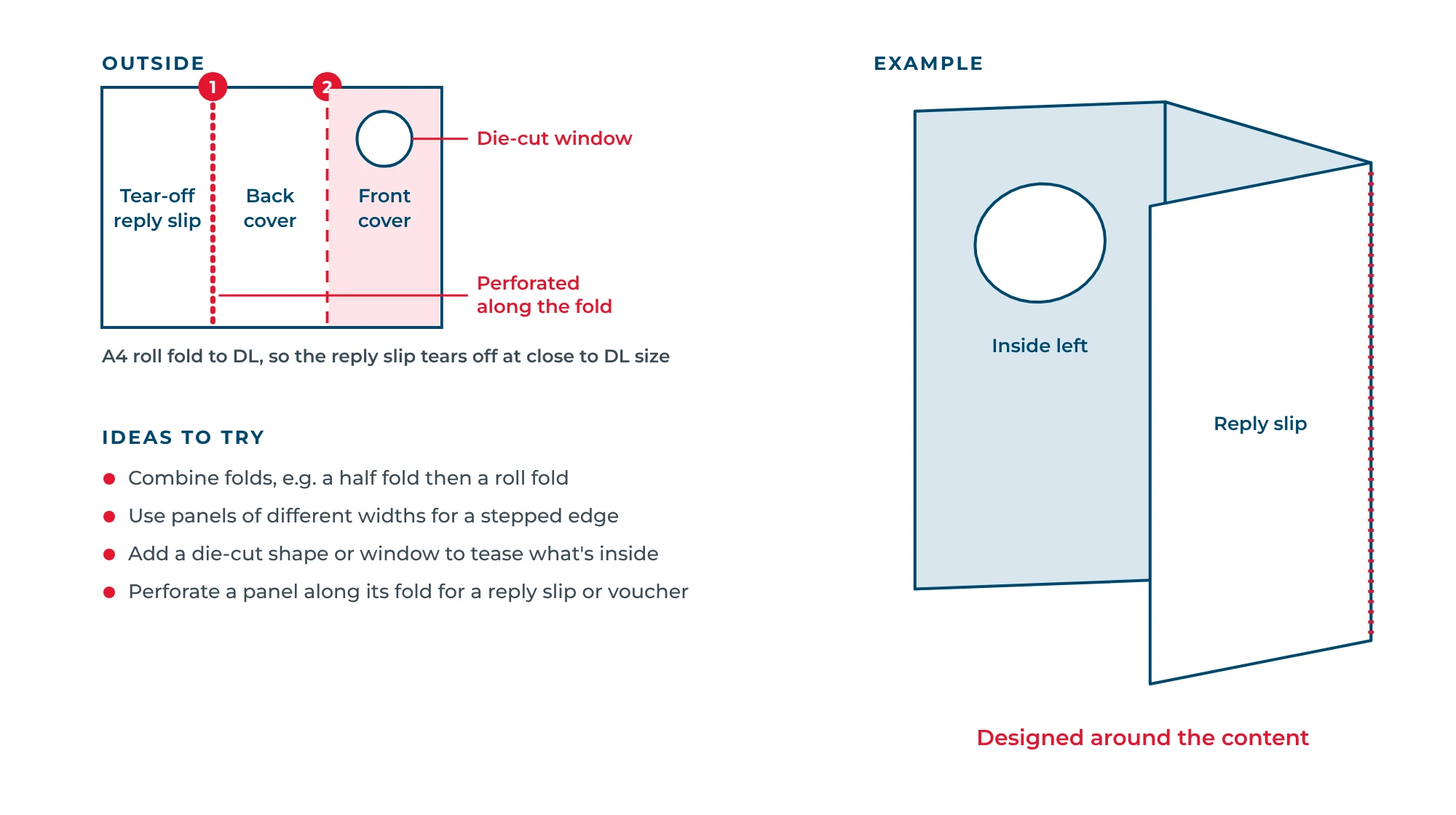
Any format that doesn’t follow a standard pattern, from combined folds and unequal panels to die-cut windows and tear-off reply slips. When the way it opens is part of the idea, the format itself becomes memorable.
Best for: campaigns where the opening sequence matters, leaflets with a reply or voucher section, and formats that need to fit a specific holder or pack.
Design tip: Bespoke formats can need custom fold formes and hand finishing, which adds time and cost.
Have a format in mind? Send us a sketch or a folded paper dummy and we’ll work out the most practical way to produce it.
Common Folded Leaflet Mistakes
Most folded-leaflet problems are set up in the artwork, long before anything reaches the press. These are the ones we see most often.
Equal panels on a fold that tucks in
A panel that folds inside has slightly less room than the panels around it. If it’s full width, it catches on the fold, buckles or stops the leaflet closing flat, and it pushes your artwork off-centre on every panel after it.
✗ Avoid: splitting a roll, gate or double parallel fold into equal sections.
✓ Do this instead: Make the tuck-in panels 2–3mm narrower. That’s the inner flap on a roll fold, both outer flaps on a gate fold and the two inner panels on a double parallel fold. Ask us for a template with the exact widths for your size.
The cover on the wrong panel
On the flat sheet, the front cover often isn’t the first panel on the left. On a roll fold it’s the right-hand panel of the outside, and on a Z-fold the front and back covers are on opposite sides. Get it wrong and the leaflet opens on the back page, or the cover ends up inside.
✗ Avoid: assuming the front cover is the first panel on the sheet.
✓ Do this instead: before you design, mark the front cover, the back cover and the first panel people see when it opens. The fold illustrations above show this for each format.
Artwork too close to a fold or edge
Folding and trimming both have small tolerances. Text that runs across a fold can disappear into the crease, details right at the edge can be trimmed off, and backgrounds that stop at the edge can leave thin white slivers.
✗ Avoid: small text, faces or logos running across a fold or right up to the trim.
✓ Do this instead: keep key details a few millimetres clear of folds and edges, and extend backgrounds 3mm past every trimmed edge. Supply CMYK PDFs with images at 300ppi.
Upside-down panels on a cross fold
On a cross fold, the second fold turns half the sheet over, so the top panels sit upside down on the flat artwork. Lay everything out the right way up and half the leaflet reads upside down once it’s folded.
✗ Avoid: designing a cross fold as if it were a flat poster.
✓ Do this instead: fold a sheet of paper the same way, write the panel names on it, then unfold it and use it as your layout guide. Or ask us for a template.
Cracking along the fold
Thicker paper resists bending, so the fibres can split along the fold. On solid colours, dark backgrounds and photos, that shows up as a white line straight through the design.
✗ Avoid: folding heavier stock without creasing it first.
✓ Do this instead: nothing extra on your side. We crease every leaflet on 170gsm or heavier before folding. If a dark solid colour runs across a fold, lamination adds extra protection.
A call to action that's easy to miss
People read a folded leaflet in the order it opens, and the panel they finish on is a natural place to act. A phone number or web address tucked into the middle of a busy spread has to compete with everything around it.
✗ Avoid: burying your call to action in the middle of the leaflet.
✓ Do this instead: put it where reading ends, usually the back cover or the last inside panel, and repeat your contact details there.
Know What to Ask For
You don’t need to speak fluent print to order a folded leaflet. Have these details ready and we can quote accurately, first time.
1. Fold and page count, such as “6pp roll fold” or “8pp cross fold”.
2. Finished and flat size. Finished size is the leaflet when closed; flat size is the sheet opened out. Popular finished sizes are DL (99 × 210mm), A6 (105 × 148mm), A5 (148 × 210mm) and A4 (210 × 297mm).
3. Paper type. Silk is the popular all-rounder. Gloss makes photos sing but can make long text harder to read. Uncoated feels natural and is easy to write on, though colours look a little softer.
4. Paper weight. 115–150gsm suits most folded leaflets. Go lighter for mailings and door drops; go heavier when a short leaflet needs more substance.
5. Finish. Matt or gloss lamination protects the leaflet and its folds. Spot UV adds a raised gloss highlight to a logo or headline.
6. Quantity, deadline and delivery. Short runs are printed digitally, larger volumes by litho, and we can deliver them folded, flat or straight into the post.
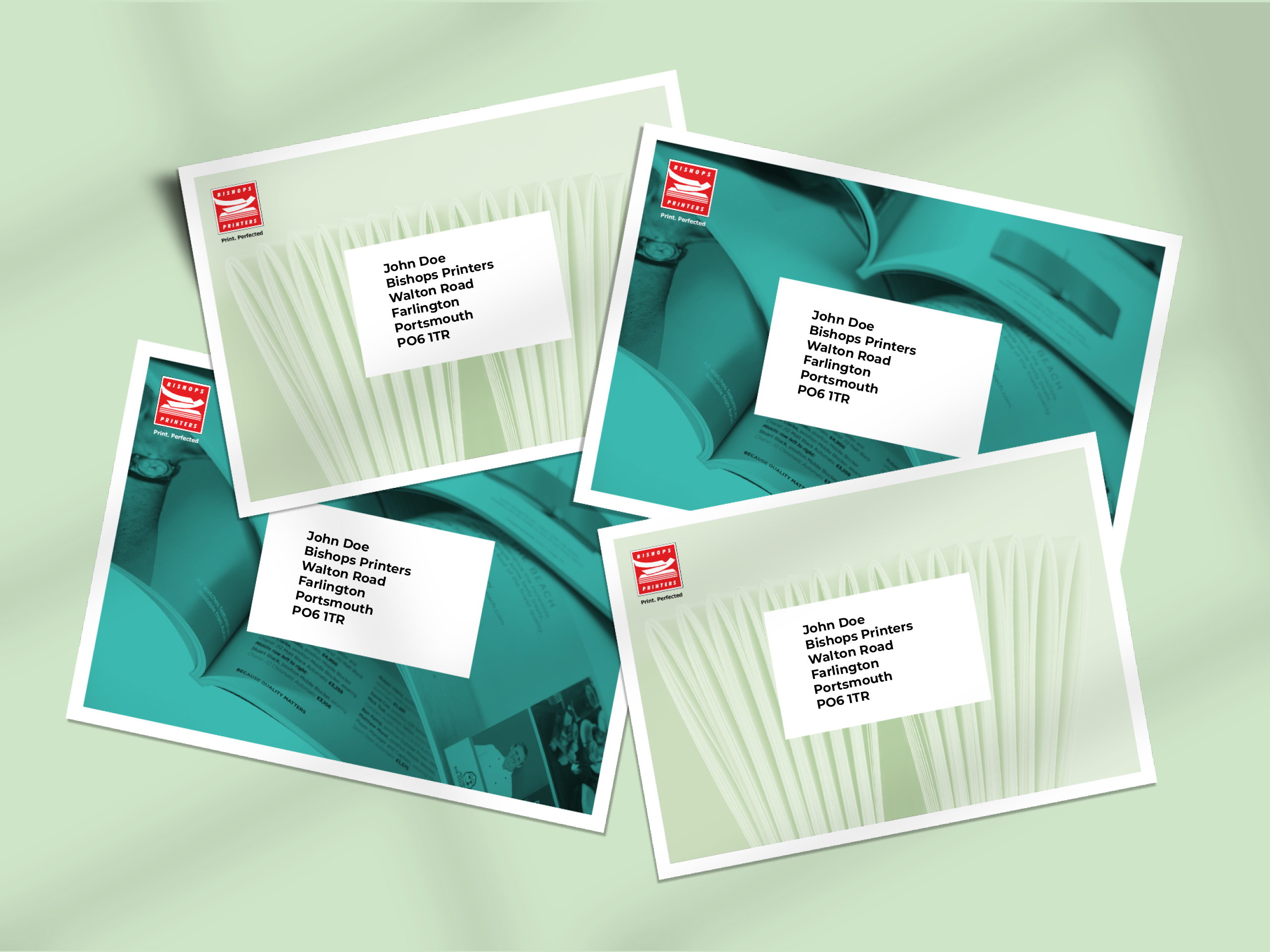
Sending Leaflets by Post?
The size, weight and thickness of a folded leaflet all affect postage, so it pays to choose the format with mailing in mind.
| Use | Format that works well | Why |
|---|---|---|
| Letter pack or insert | DL roll fold or Z-fold | Slides straight into a DL envelope |
| Door drop | A5 half fold or DL | Fits letterboxes and stays light |
| Self-mailer | DL Z-fold or roll fold, tabbed or glued | No envelope needed |
| Rack or dispenser | DL roll fold | Fits most leaflet dispensers and stays closed |
Through our mailing house, The Mailing People, we can print, fold, enclose, fulfil and post your leaflets as one service.
From Fold to Finished Leaflet
Last year we produced 282.7 million folded sheets. With production running 24 hours a day, 363 days a year, short runs slot in nicely and long runs are accommodated easily.
Our Heidelberg B2 litho presses and HP indigo digital presses keep colour sharp and consistent from the first sheet to the last. Our extensive in-house folding lines handle everything from simple half folds to multi-panel formats, with creasing added for heavier stocks, 170gsm and above. Because printing, folding and finishing all happen under one roof, we keep tight control of quality and turnaround, however big the job.

More Resources
Folder Templates

Paper Sizes
Graphic Design